
 Hong Kong SAR
  Macau SAR
  Singapore
  Mainland China
 Recruitment
  Staffing
  Executive
  Solutions

 Back
Back 
The AI Talent Gap in Hong Kong Is Real — Here’s What Smart Employers Are Doing About It
7 mins read
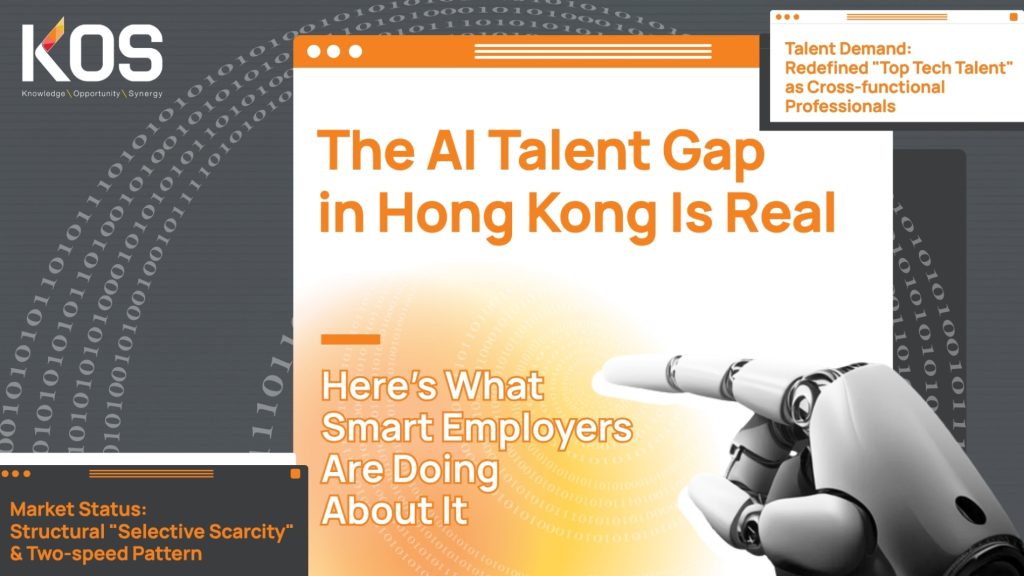
Something has shifted in Hong Kong’s technology hiring market — and it’s not subtle.
After 18 years in technology recruitment, I’ve seen economic cycles, market corrections, and hiring booms come and go. But what’s unfolding in 2026 is different. We’re not just in another talent shortage. We’re in the middle of a structural shift — one that’s redefining what “tech talent” means, how companies compete for it, and who ultimately wins.
The numbers tell a stark story: one in four Hong Kong companies now report serious difficulty hiring for AI-related roles. Salary premiums for specialists in AI, cybersecurity, and data have surged to 15–25% above standard packages. And across the market, there’s a growing mismatch: an oversupply of generalist profiles sitting alongside persistent shortages in the specialisms that matter most.
But behind the data, I see something more interesting playing out in my conversations with hiring managers and candidates every day. The companies that are winning in this market aren’t just the ones offering the highest salaries. They’re the ones that have fundamentally rethought how they approach talent.
The Market Has Split in Two
Hong Kong’s tech hiring market in 2026 is best described as “selective scarcity.” The overall Net Employment Outlook has dipped, with more than half of employers having already introduced AI into their operations. Some entry-level and generalist roles are being absorbed by automation. But at the same time, competition for specialists — in AI, machine learning, data science, cybersecurity, and cloud architecture — is fiercer than ever.
This creates a two-speed market:
For generalist roles, companies are cautious. Headcount budgets are flat. Hiring processes are longer and more deliberate.
For specialist roles, it’s a candidate’s market. The best people are fielding multiple offers and are off the market within three to four weeks. Traditional infrastructure engineering is plateauing, with most roles centred on replacement hires rather than team expansion.
If you’re a hiring manager still running a three-month recruitment process for a senior data engineer, you’re not in the race — you’re watching from the stands.
It’s Not Just About Technical Skills Anymore
Here’s what most people are missing in the conversation about AI talent: the definition of “top tech talent” has changed.
The candidates commanding the strongest offers in Hong Kong right now aren’t just the ones with the deepest Python skills or the most impressive model-training portfolios. They’re the ones who combine technical expertise with business acumen, regulatory awareness, and cross-functional thinking.
I see this every week. A client comes to me looking for a “pure” AI engineer. After three rounds of interviews with strong candidates who don’t quite fit, we realise the real need is someone who can not only build models but also translate their output into business decisions, navigate Hong Kong’s data privacy requirements, and communicate findings to a non-technical board.
This shift toward cross-functional expertise is particularly pronounced in financial services, where regulatory complexity adds another dimension. And it’s creating a premium for candidates who have historically been undervalued — those who sit at the intersection of technology and domain knowledge.
What the Smartest Employers Are Doing Differently
Through hundreds of placements and client conversations, I’ve identified three strategies that consistently separate the companies landing top tech talent from those struggling to fill roles:
1. They’re building teams, not hunting unicorns
The perfect candidate — the AI engineer who also understands your compliance framework, speaks Cantonese and Mandarin, and has financial services experience — may not exist. The best hiring managers know this. Instead of holding out for the impossible, they design complementary teams where different members contribute different strengths.
This means a strong ML engineer paired with a domain specialist. A cybersecurity architect working alongside someone with deep regulatory knowledge. The team, collectively, becomes the unicorn.
2. They’re embracing contract and project-based talent
One of the most significant trends I’m seeing is the shift toward flexible hiring models. Employers are increasingly using contract, project-based, and outsourced talent to access specialist skills without long-term headcount commitment.
This is not a compromise — it’s becoming the smartest strategy in the market. For a company that needs to stand up an AI proof-of-concept, a six-month contract with a specialist data scientist may deliver far more value than a permanent hire who takes three months to onboard and may not be the right fit for the next phase.
For candidates, I’d also challenge the lingering stigma around contract roles. A well-chosen contract position can strengthen your profile, expose you to cutting-edge projects, and often leads to permanent opportunities. The market no longer “labels” you as a contractor based on one role — what matters is the skills you build and the impact you deliver.
3. They’re competing on more than salary
While salary premiums for niche roles are real, the era of aggressive bidding wars is largely behind us. Salary budgets are projected to return to around 4%, with job movers receiving 10–15% for standard moves and significant premiums of 15–20%+ reserved strictly for high-demand specialisms.
What’s winning candidates over? Career stability, learning opportunities, and clear progression paths. Fifty-five percent of tech professionals say better work-life balance or flexible arrangements are their top priority — ahead of salary increases.
The companies I see retaining their best people are the ones investing in reskilling programmes, offering exposure to meaningful AI projects, and demonstrating a genuine commitment to professional development. In a market where employers expect up to half their workforce will need AI-related reskilling, showing candidates a clear path to staying relevant is a powerful differentiator.
A Note to Candidates: Invest in the Intersection
If you’re a technology professional in Hong Kong reading this, here’s my advice: the biggest career returns right now come from investing in the spaces where disciplines overlap.
Pure technical depth will always have value. But the professionals I see commanding the strongest offers and the most interesting roles are those who can bridge technology and business. Learn how AI regulation is evolving. Understand the commercial implications of what you build. Develop the communication skills to influence stakeholders who don’t speak your technical language.
And don’t underestimate the power of sector expertise. A cybersecurity specialist who deeply understands financial services compliance is exponentially more valuable than one who doesn’t. An AI engineer with healthcare domain knowledge opens doors that pure technologists cannot.
Looking Ahead
Hong Kong’s technology talent market is not broken — it’s recalibrating. The old playbook of posting a job description and waiting for applications is no longer enough. Companies need to be faster, more strategic, and more creative in how they attract and retain specialist talent.
For candidates, the message is equally clear: the market rewards those who invest in the right skills, stay adaptable, and think beyond purely technical contributions.
Whether you’re building a team or building a career, the opportunities in Hong Kong’s tech market are significant. The question is whether you’re approaching them with the right strategy.
I’d love to hear what you’re seeing in your corner of the market. What’s the biggest hiring challenge you’re facing right now? Drop a comment or reach out — these conversations make all of us sharper.
Whether you’re hiring or exploring your next move, I’m always happy to chat. Reach me at bonnie.chan@kos-intl.com or call +852 3180 4959.
Latest News
View All
27.08.26
Case Study, KOS Solutions, Market Insights
KOS Solutions Customized Training Case Study | ACCA Professional Influence Advancement Course
At every stage of career development, professional expertise remains an essential foundation for car...
10.07.26
Insight, Market Insights
「一人公司」時代:企業的人才策略正在被重寫
OpenAI創辦人Sam Altman 曾預測,全球首間估值達10億美元的「一人公司」將很快...
04.06.26
Company News, Insight, Market Insights, News
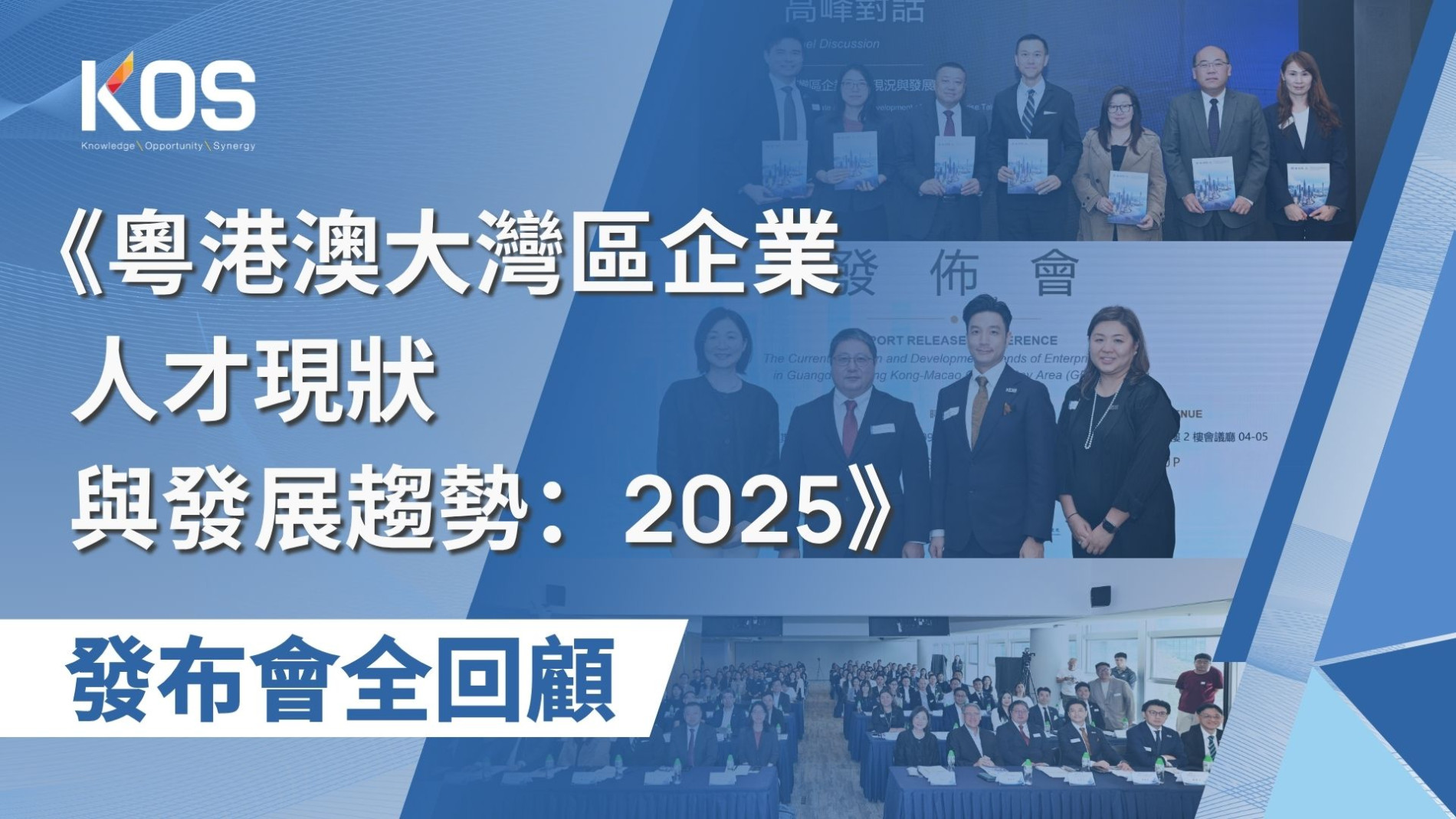
《粵港澳大灣區企業人才現狀與發展趨勢:2025》發布會全回顧
2026年5月28日,KOS高奧士國際人才集團聯同中山大學粵港澳發展研究院、中山...